How One Asheville, North Carolina Clinic Takes a Whole-Person Approach to Opioid Use Disorder Treatment
Dr. Reach
Date Published: 4/27/2026
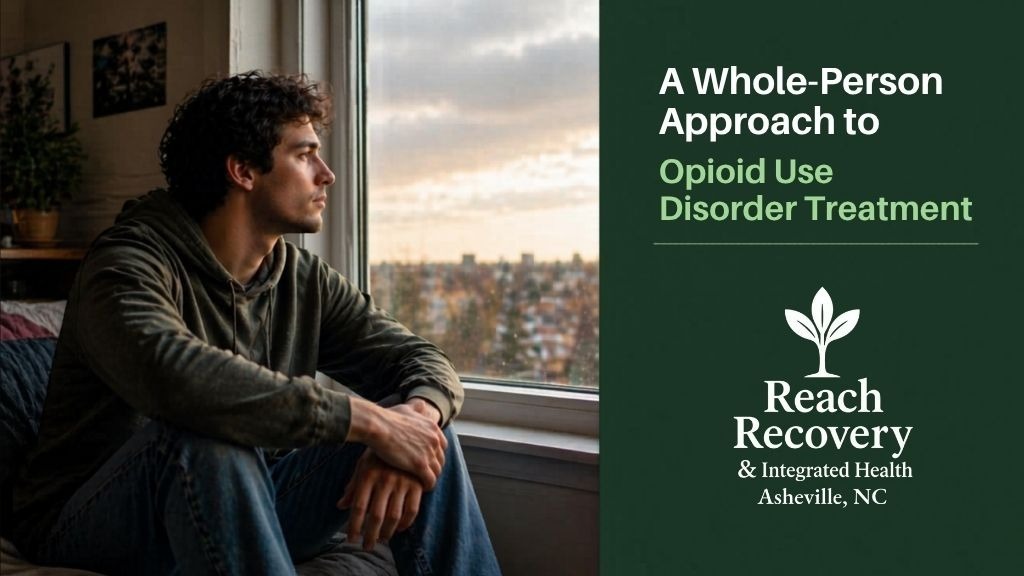
Table of Contents
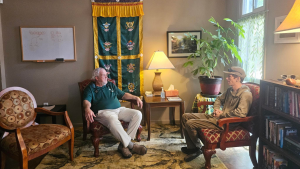
Dr. Ralph Thomas Reach, MD—known to colleagues and patients as Dr. Tom Reach, or simply Dr. Tom—is a physician trained in Addiction Medicine and Family Medicine with decades of experience treating substance use disorders.
Over the course of my career, I’ve practiced in both rural and urban settings throughout Central Appalachia, often on the front lines of the opioid epidemic. That experience has shaped not just how I treat addiction, but how I understand the people who struggle with it.
When individuals begin searching for opioid addiction treatment or exploring rehabs in the areas where I and my clinic serve—here in Asheville and across Western North Carolina—they often encounter a range of approaches. Some programs emphasize medical treatment, some focus on counseling and behavioral support, and many rely on inpatient settings to stabilize patients before returning to daily life.
At RRIH, we take an integrated approach that draws on elements of all these modalities, but we do it within an outpatient model. While some patients may need inpatient care, our approach allows people to stay at home, close to family, and continue with work or school—so recovery happens in the real world, not just a facility. Done right, this model makes treatment more accessible, sustainable, and rooted in daily life—so recovery takes hold where it must: in the whole person’s real-world environment.
In this article, you will learn:
- The medical foundation for effective opioid dependence treatment, including medications for opioid use disorder (MOUD).
- The critical role of social connection in recovery and why it is essential for success.
- Personal practices—daily habits that build stability, self-care, and self-agency.
- Spiritual grounding—how connecting to purpose or a higher power supports lasting recovery.
The Medical Foundation: Stabilizing the Body and Brain
Addiction is, first and foremost, a medical condition. Effective opioid dependence treatment must begin with evidence-based care, including Medication-Assisted Treatment (MAT) or, more precisely, Medications for Opioid Use Disorder (MOUD), and, when appropriate, medically assisted detox.
These treatments help stabilize brain chemistry, reduce cravings, and significantly lower the risk of relapse and overdose. This is especially important in the current environment, where fentanyl has dramatically increased the potency and danger of opioid use.
Patients seeking fentanyl addiction treatment in the area where I serve—Asheville and Western North Carolina—often require a carefully managed approach due to the severity of withdrawal and heightened risk. In these cases, proper medical oversight is not optional—it is essential.
But medication alone is not the goal; it is the starting point. As we progress, we engage in neural-repatterning—rewiring the brain through social connection, personal practice, and spiritual grounding. In the next sections, we will examine each of these dimensions and how they work together to shape lasting recovery.
Social Connection: Recovery is Not Meant to Be Done Alone

Addiction rarely develops in isolation, and recovery does not happen in isolation either. Effective treatment must address the psychological and social realities of each patient’s life. This includes individualized therapy, but also something equally important: meaningful human connection.
Johann Hari, in Chasing the Scream, writes, “The opposite of addiction is not sobriety. The opposite of addiction is connection.” While this statement simplifies a complex issue, it reflects something I have seen repeatedly in practice. People recover more effectively when they are supported, understood, and connected.
This is where Certified Peer Recovery Specialists play a vital role. These individuals bring lived experience into the recovery process, offering guidance and support that cannot be replicated by clinical training alone. They help patients navigate the real-world challenges of recovery in a way that is both practical and deeply personal.
At Reach Recovery & Integrated Health, we incorporate certified peer support as part of a broader, integrated approach to care. While we do not replace formal psychotherapy or psychiatric services, we recognize that structured support, consistent encouragement, and authentic human connection are essential components of lasting recovery. When combined with appropriate medical care and counseling resources, this relational dimension strengthens the foundation upon which recovery is built.
Personal Practice: Building the Daily Foundations
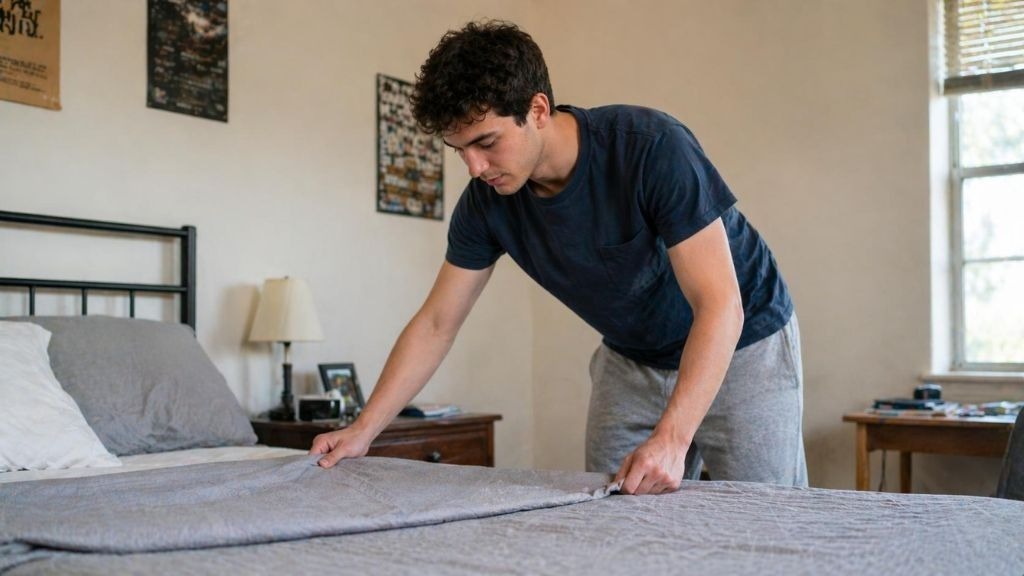
Personal practice is the bedrock of lasting recovery. It is the daily commitment to yourself—small, consistent actions that begin to reshape patterns in both mind and body. This is where real change takes root, not in a single moment, but in what is practiced day after day.
When I talk about personal practice, I mean the intentional habits and disciplines that give structure to your life and reinforce stability. These may include:
- Journaling to clarify thoughts and track progress
- Prayer or meditation to cultivate focus and inner calm
- Setting aside time each day for reflection
- Maintaining your environment—making your bed, keeping your space orderly
- Practicing basic self-care, including sleep, hygiene, and physical health
- Establishing consistent routines around meals, rest, and daily responsibilities
These are not dramatic actions, but they are powerful. Over time, this kind of consistency engages what we now understand as neural repatterning—the brain’s ability to reorganize itself by forming new habits and weakening old, destructive patterns. As these new patterns take hold, the way a person thinks, responds, and behaves begins to change in a meaningful and lasting way.
In my own life, personal practice has been essential. It provides a place to pause, to recalibrate, and to remain grounded when old habits attempt to reassert themselves. While each person’s routine will look different, the principle remains the same: consistency creates stability, and stability allows recovery to take root.
Together, personal practice, spiritual grounding, and social connection form a three-part foundation for lasting recovery. In the next section, we will examine the spiritual dimension—what it means to be grounded in a sense of purpose, and for many, a relationship with God.
Spiritual Grounding: How an Acknowledgment and Connection with a Power Greater Than Ourselves Supports Lasting Recovery

First, I need to define what I mean by a vertical connection. By this, I mean an acknowledgment that I am not self-sufficient—that something greater than myself exists, and that I must orient myself toward it.
This is not something I can define for you. It is not a formula, and it is not a requirement imposed from the outside. These are deeply personal—often sacred—matters that must be worked out individually.
For many, this takes the form of a relationship with God—not as an abstract idea, but as a living reality. Others may not express it in those terms. But wherever a person begins, what matters is the recognition that my own thinking, by itself, is not enough, and a willingness to look beyond myself for grounding and direction.
At some point in my own recovery, I came to a hard realization: my best thinking, my best intentions, and my strongest efforts were not enough to break the cycle. Left to myself, I returned to the very patterns that harmed me. That realization was not a defeat—it was a turning point. It opened the door to the possibility that restoration, stability, and what I would call sanity required something beyond my own willpower.
This is why the vertical connection matters. It is not an abstract idea or an optional add-on. It became, for me, the very thing that made lasting recovery possible—a source of guidance, stability, and strength that did not depend solely on my own fluctuating thoughts and emotions.
From that starting point, I have seen a number of practical ways people begin to cultivate this connection:
- Prayer, in whatever form that may take
- Meditation and intentional stillness
- Dedicated times of reflection and self-examination
- Participation in group devotionals or religious worship
- Reading and studying sacred texts
- Engaging with inspirational or spiritually grounded material
- The daily practice of gratitude—recognizing and giving thanks for what has been given, rather than focusing only on what is lacking
These are not requirements. They are simply pathways—ways that people have found helpful as they begin to reach beyond themselves. Each person must find what is meaningful and sustainable in their own life.
In my own experience, gratitude became one of the simplest and most powerful of these practices. Taking time—sometimes even making a written list—to acknowledge what I had been given shifted my perspective in a profound way. It moved me away from frustration and self-focus, and toward humility and recognition that I was not carrying the whole burden on my own.
For those who do not identify with religious belief, this idea can still take shape. Some find that the strength of the group, a commitment to truth, or a set of moral principles becomes the first expression of something “greater” than themselves. Even here, the movement is the same: a step away from complete self-reliance and toward something outside of it.
In my own words:
“I came to realize that my very best thinking had gotten me to exactly the awful place I was. I realized I was never going to just ‘think’ myself out of the jam I was in. I then accepted that I was going to need something greater than myself to find sanity. Finally, I accepted the need to put myself into the hands of this higher power.”
That movement—from the delusion of self-sufficiency to humility, from control to trust—is the beginning of spiritual grounding. And for many, it becomes one of the most stabilizing forces in long-term recovery.
Final Thoughts
Effective opioid addiction treatment is not built on a single intervention, but on a comprehensive approach that addresses the full reality of a person’s life.
It begins with a strong medical foundation, including the appropriate use of medications for opioid use disorder (MOUD), applied with care and clinical judgment. But medication alone is not enough.
Recovery also depends on social connection—on relationships that provide accountability, encouragement, and a sense of belonging. It is strengthened through personal practices: the daily habits that build stability, support self-care, and restore a sense of agency. And for many, it is sustained through spiritual grounding—a connection to purpose, meaning, or a higher power that brings direction to the process.
Taken together, these elements form a coherent model of care—one that does not treat addiction in isolation but addresses the whole person.
For those searching for opioid addiction treatment in Asheville, NC, or exploring rehabs in Asheville, NC, the most important question is not simply what services are offered, but how care is delivered.
The most effective treatment recognizes that recovery is a process, not an event—and that lasting change requires support at every level.
In the end, it is not just about managing addiction.
It is about restoring lives.
About the Author
Dr. Ralph Thomas Reach, MD—known to his patients as Dr. Tom Reach—is a physician trained in Addiction Medicine and Family Medicine with decades of experience treating substance use disorders. A graduate of the University of South Carolina School of Medicine, he practiced emergency medicine for over 20 years in Central Appalachia and is trained in addiction medicine. Dr. Reach is licensed in North Carolina and focuses on providing comprehensive care, including Suboxone treatment, for individuals seeking recovery.
Read Dr. Reach’s full bio here: Provider Dr. Tom Reach | President & Founder