
When Anxiety and Substance Use Disorder Feed Each Other: Practical Tools for Recovery

Staff
Date Published: 8/10/2026
Table of Contents
Anxiety and substance use disorder are different conditions, but they often become closely connected. A person may begin using alcohol or another drug to quiet racing thoughts, soften panic, sleep, feel more comfortable around other people, or escape the effects of trauma. The relief may feel real at first. Over time, however, substance use can intensify anxiety, disrupt sleep, create withdrawal symptoms, and leave the person increasingly dependent on the very substance that is making life more difficult.
This article is written especially for people with substance use disorder, people in recovery, and the families who care about them. Its practical lessons, however, can help anyone who struggles with anxiety. Learning to recognize anxiety and respond in healthier ways can support greater stability, clearer thinking, and better overall health.
In This Article, You Will Learn
- Why anxiety and substance use disorder often occur together
- How repeated thoughts and behaviors strengthen patterns in the brain
- Practical tools for responding to anxiety without returning to substance use
- Why whole-person treatment can support lasting recovery
Understanding Substance Use Disorder and Anxiety
Substance use disorder is a treatable medical condition in which alcohol or drug use continues despite harmful effects on health, relationships, responsibilities, or other areas of life. It is not simply a failure of discipline or character. Because substance use disorder affects motivation, judgment, stress responses, learning, and behavior, willpower alone is often not enough to produce lasting change.
Anxiety is also more than ordinary nervousness. Some worry is a normal response to uncertainty or danger. An anxiety disorder, however, may involve persistent fear, tension, panic, avoidance, or physical symptoms that interfere with daily life. Generalized anxiety disorder, panic disorder, social anxiety disorder, phobias, and post-traumatic stress can all create powerful distress.
When a person experiences both a substance use disorder and a mental health condition, they are often described as co-occurring disorders. Anxiety may begin before substance use, develop as a consequence of it, intensify during withdrawal, or share risk factors with addiction, including trauma, chronic stress, genetics, and environment. National health authorities therefore recommend assessing and treating both conditions together whenever possible.
The Anxiety–Substance Use Cycle
It goes without saying, people do not initially use substances because they want their lives to become chaotic. They may be trying to feel calm, confident, numb, energized, or able to sleep. The problem is that temporary relief can teach the brain a powerful lesson: When I feel this way, this substance makes it stop. The next time anxiety appears, the urge to use may arrive more quickly.
Eventually, the substance may begin producing the symptoms it was used to escape. Sleep becomes less restorative. Financial strain, secrecy, damaged relationships, and fear of consequences add new sources of anxiety. As tolerance or dependence develops, a person may use less for pleasure and more to avoid withdrawal or emotional distress.
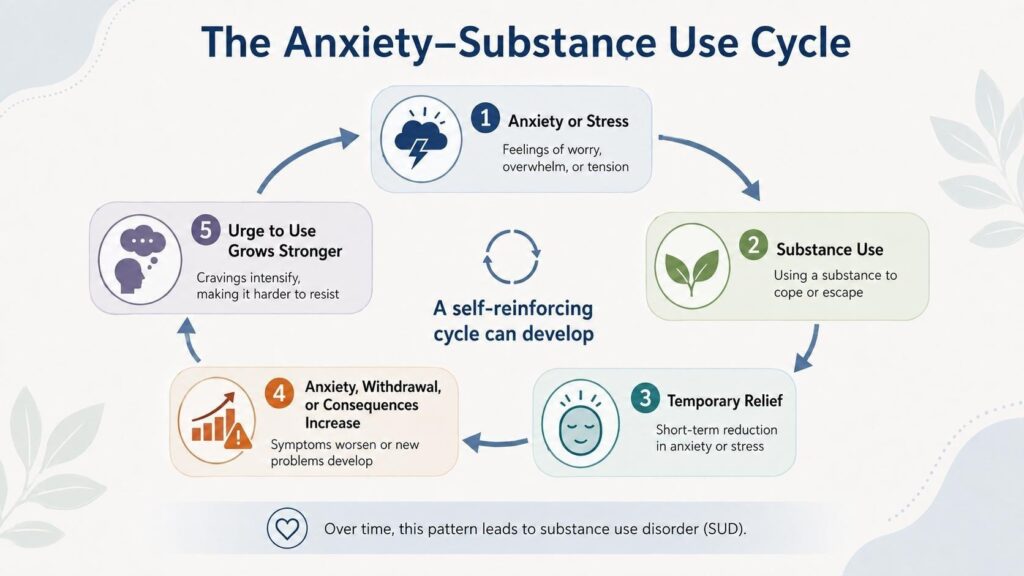
The pattern can become self-reinforcing:
Anxiety or stress leads to substance use. Substance use brings temporary relief. The effects wear off, and anxiety, withdrawal, or consequences worsen. The urge to use then becomes stronger. Frequently, this pattern leads to the development of a substance use disorder (SUD).
The connection can also work in more than one direction. Anxiety may increase a person’s vulnerability to substance use, but substance use can also produce, uncover, or worsen anxiety. Shared influences such as trauma and chronic stress may contribute to both conditions.
Breaking this cycle requires more than removing the substance. It requires helping the person develop new ways to understand distress, regulate emotions, respond to triggers, and ask for support.
Neuroplasticity and Neural Repatterning
Neuroplasticity is the brain’s ability to change through experience, learning, and repeated behavior. This capacity helps explain how unhealthy patterns can become established—but it also gives us reason for hope.
Repeated substance use can make certain responses feel almost automatic. Conflict, loneliness, physical pain, or a wave of panic may trigger craving before a person consciously decides what to do. That does not mean change is impossible. It means the old pathway has been practiced many times.
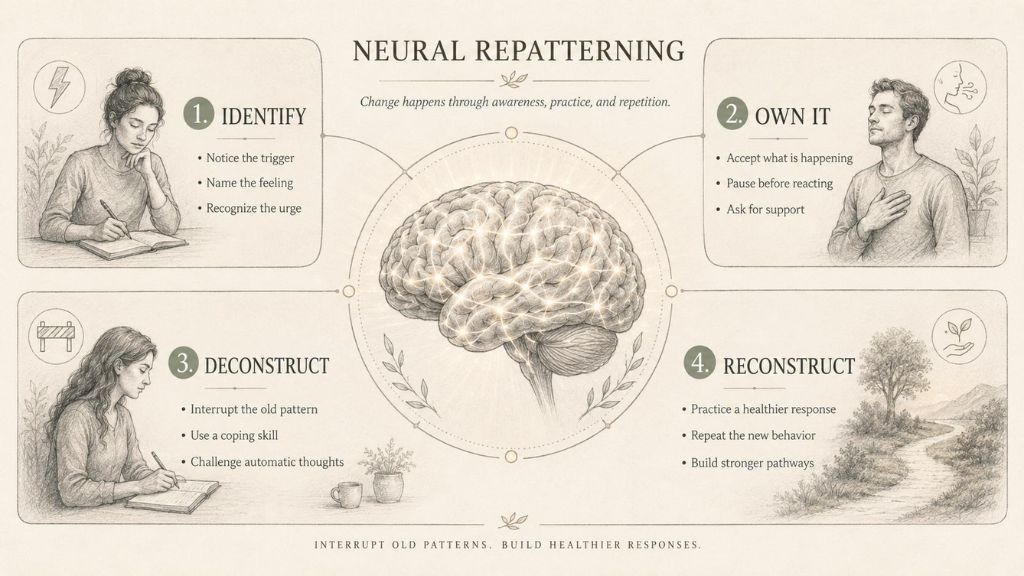
Neural repatterning is a useful way to describe the intentional process of strengthening healthier responses. A person notices the trigger, pauses, names the feeling, uses a coping strategy, reaches out for support, and chooses not to use. At first, that response may feel difficult, extremely uncomfortable, or unnatural. With repetition, it can become more accessible.
Recovery may not erase every old association. Instead, it builds stronger alternatives. Research described by the National Institute on Drug Abuse indicates that learning new behaviors, pursuing new goals, and finding healthier sources of reward can reshape neural connections and gradually weaken automatic drug-related patterns.
Each time someone tolerates anxiety without using, attends counseling, goes to a recovery meeting, exercises, prays, meditates, tells the truth, or calls a trusted person, that individual is practicing a different way of responding.
Practical Ways to Address Anxiety in Recovery
1. Treat Both Conditions
Anxiety should not be dismissed as something a person simply needs to “get over,” and substance use should not be treated in isolation from the emotional distress surrounding it. Integrated care may include medical treatment, counseling, peer support, cognitive behavioral therapy, trauma-informed services, mutual-help groups, and medication. SAMHSA reports that treating co-occurring conditions together can improve treatment outcomes and quality of life.
For opioid use disorder, medications such as buprenorphine can reduce withdrawal symptoms and cravings while lowering the risk of overdose. A qualified Suboxone doctor can determine whether the medication is appropriate and monitor treatment safely. A reputable Suboxone clinic should see Suboxone treatment as one part of a broader recovery plan—not as a substitute for emotional growth, accountability, counseling, and support.
2. Use HALT as a Daily Check-In
HALT stands for Hungry, Angry, Lonely, and Tired. These ordinary conditions can increase emotional reactivity and make cravings or anxious thoughts harder to manage.
When distress rises, pause and ask:
Am I hungry?
Am I angry?
Am I lonely?
Am I tired?
The answer may not explain everything, but it can identify an immediate need. Eat something nourishing. Talk through anger rather than acting on it. Call someone instead of isolating. Protect time for rest. Small actions can prevent a difficult moment from becoming a crisis.
3. Learn to Pause Before Reacting
Anxiety often tells us that something must be fixed immediately. Recovery teaches us that a feeling can seem urgent without requiring an impulsive response.
Try slowing your breathing, placing both feet on the floor, naming five things you can see, or simply saying:
I am noticing anxiety. I do not have to act on this feeling.
Mindfulness is not pretending that everything is peaceful. It is learning to notice what is happening without automatically obeying every thought, fear, or craving. Please keep in mind that when one first adopts practices such as these, they may not seem to work very well. So, remember: persistence is absolutely critical. Change will come.
4. Move the Body and Protect Basic Routines
Walking, stretching, gardening, strength training, or yoga can provide a healthier outlet for anxious energy. Research suggests that physical activity can help reduce anxiety symptoms, although it should complement rather than replace appropriate professional care.
Consistent sleep, regular meals, hydration, and moderation with caffeine also matter. When the nervous system is already strained, exhaustion and skipped meals can make ordinary stress feel much larger.
5. Challenge Avoidance in Manageable Steps
Avoidance usually reduces anxiety in the moment, which is why it becomes so tempting. Over time, however, avoiding every uncomfortable place, conversation, responsibility, or feeling can make anxiety more powerful.
With professional guidance when needed, choose a small and realistic step. Make the phone call. Attend part of the meeting. Spend ten minutes on the task. Ask someone to go with you.
Progress is not measured by never feeling anxious. It is measured by learning that anxiety can be experienced without running from it or returning to substance use. Cognitive behavioral therapy, which often includes gradually facing feared situations while developing healthier thought and behavior patterns, is an established treatment for anxiety disorders.
6. Stay Connected
Isolation allows fear and craving to grow without challenge. Recovery is strengthened by connection with counselors, physicians, peer recovery specialists, sponsors, support groups, family members, trusted friends, and faith communities when appropriate.
You do not have to tell everyone everything. But someone should know when you are struggling. Asking for help early is not weakness; it is a recovery skill.

Finding Integrated Care in Asheville
Someone seeking addiction treatment in Asheville may need more than help stopping a substance. That person may also need support for anxiety, trauma, sleep problems, damaged relationships, and the practical work of rebuilding daily life.
Likewise, someone looking for drug treatment in Asheville should be able to find care that considers physical health, mental health, and long-term recovery together.
At Reach Recovery and Integrated Health, we believe treatment should meet people where they are and help them move toward stability, health, and meaningful change. For individuals with opioid use disorder, medication-assisted treatment may provide the physical stability needed to begin deeper recovery work. Counseling, Certified Peer Recovery Specialist support, healthier routines, and neural repatterning can then help people practice a different way of living.
A More Hopeful Pattern Is Possible
Anxiety can make substance use feel like relief, and repeated substance use can make anxiety more difficult to manage. But that cycle is not permanent. The brain can learn through repetition, and recovery provides repeated opportunities to practice honesty, emotional regulation, connection, self-care, and healthier responses to stress.
Change often occurs one choice at a time.
Eat the meal. Make the call. Attend the appointment. Take the walk. Tell someone the truth. Use the coping skill. Allow the anxious feeling to rise and fall without acting on it.
These actions may seem small, but together they form a new pattern.
If you or a loved one is struggling with a substance use disorder, Reach Recovery and Integrated Health is here to help. Call 828-575-2070 or visit the Reach Recovery and Integrated Health website to learn more about compassionate, evidence-based treatment in Asheville and Western North Carolina.
References and Resources
- National Institute on Drug Abuse: Co-Occurring Disorders and Health Conditions
- SAMHSA: Screening and Treatment of Co-Occurring Disorders
- National Institute of Mental Health: Anxiety Disorders
- Constance Scharff, Ph.D.: The Link Between Anxiety & Substance Abuse and Effective Treatments for Anxiety & Addiction
- NeuroLaunch: Understanding the Complex Relationship Between Anxiety and Addiction
- National Suicide Prevention Lifeline: 988lifeline.org
Disclaimer: This article is for informational purposes only and should not be considered medical advice, diagnosis, or treatment. Anxiety, withdrawal symptoms, and substance use disorders should be evaluated by qualified healthcare professionals. Some withdrawal syndromes may require medical supervision.